Article / SME Financing Gap
Supply Chain Finance in MENA: Why SMEs Need It Now
Updated on April 10, 2026
8 min read


On This page
Across the Middle East and North Africa, small and medium-sized businesses are the backbone of the real economy. They supply goods to large manufacturers, distribute products across markets, support healthcare systems, and keep retail and construction supply chains moving.
Yet despite their importance, many SMEs operate with fragile working capital. Payment cycles can stretch to 60, 90, or even 120 days, while salaries, raw materials, and operational expenses must be paid immediately.
This mismatch creates a constant pressure on cash flow.
A company can be profitable on paper, have strong customers, and still struggle simply because cash arrives too slowly.
This is where Supply Chain Finance (SCF) becomes incredibly powerful.
And across the MENA region, its importance is only growing.

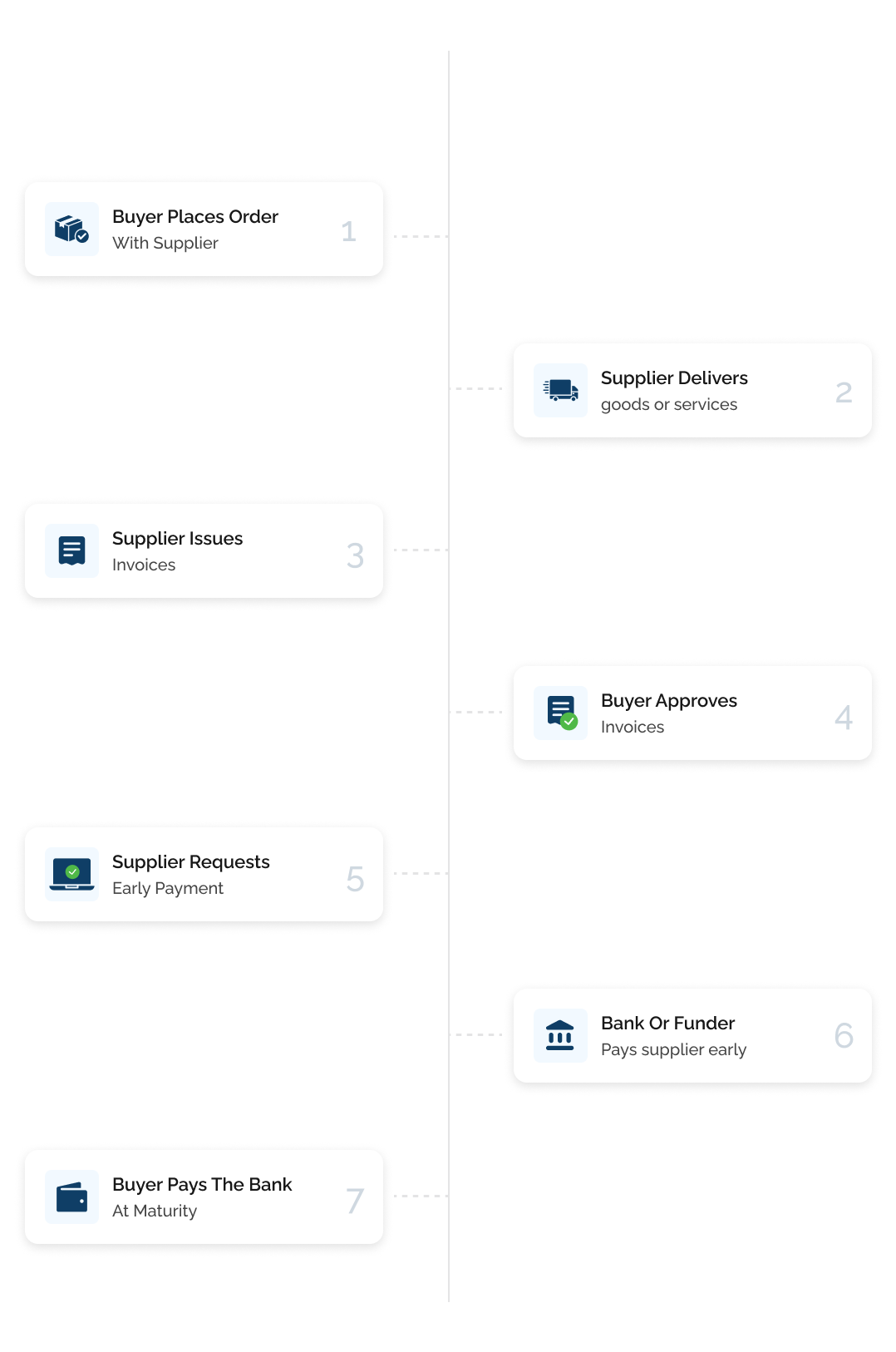
How Supply Chain Finance Works?
Why the Region Is Ready for SCF Now
Five or ten years ago, supply chain finance programs often faced operational challenges in the region.
Many processes were paper-heavy. Supplier onboarding could take months. Invoice verification required manual checks.
Today, that environment is changing quickly.
Across the region, governments are introducing electronic invoicing systems and digital tax platforms that standardize invoice data and improve transparency.
Countries like Saudi Arabia and Egypt have already implemented national e-invoicing frameworks, creating stronger digital infrastructure around transactions.
For supply chain finance, this matters enormously.
Structured invoice data makes it easier to:
- verify transactions
- prevent duplication and fraud
- automate approval workflows
- give banks clearer visibility into financing decisions
As these digital rails expand, SCF becomes easier to deploy at scale.
Making Supply Chain Finance Practical
At PaySupp, we built our platform around a simple idea:
Supply chain finance should be easy to operate for everyone involved.
That means simplifying onboarding, digitizing verification workflows, and enabling multiple banks to participate in the same ecosystem.
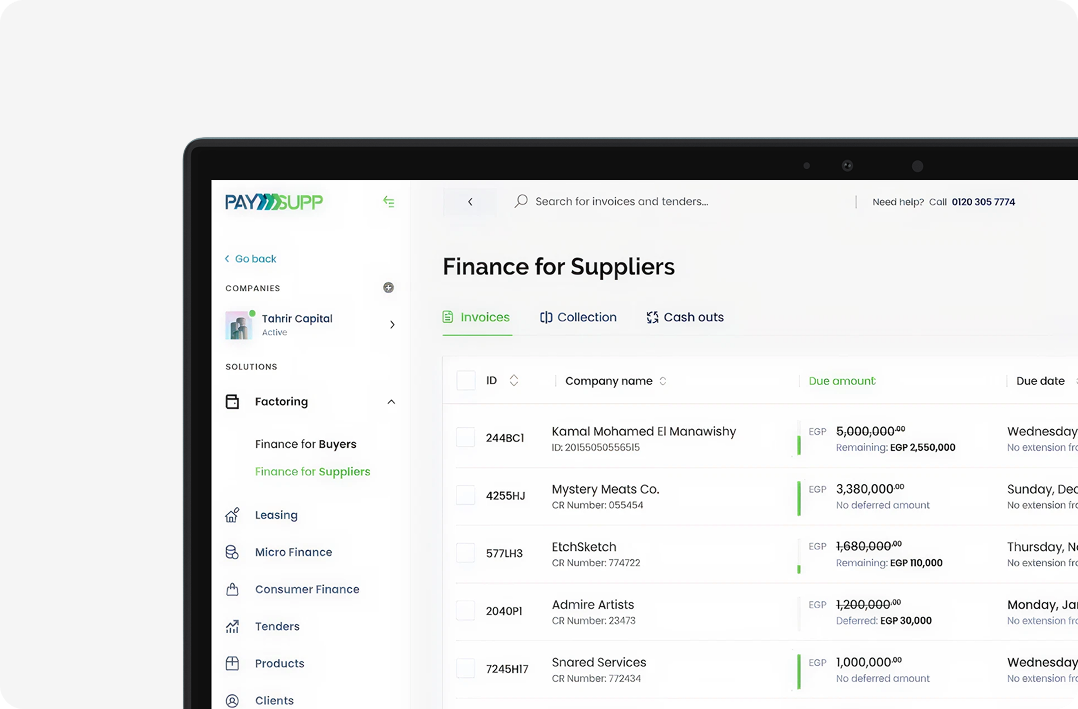
Instead of each corporate running a fragmented financing program, the platform allows suppliers, buyers, and funders to interact through a structured marketplace environment.
Suppliers can request early payment on approved invoices.
Banks and financial institutions can finance transactions with clear visibility into approval status and documentation.
Buyers can support their supply chains without changing existing payment policies.
The goal is to make working-capital financing more accessible while maintaining strong governance and transparency.
The Bigger Impact on the SME Ecosystem
When SMEs gain faster access to liquidity, the impact extends far beyond a single transaction.
Faster payment cycles allow businesses to:
- purchase inventory more reliably
- hire and retain employees
- invest in expansion
- reduce reliance on expensive short-term borrowing
For large buyers, the benefits are equally important.
Stronger supplier liquidity improves supply chain resilience and reduces the risk of disruptions.
In a region where supply chains are becoming more integrated across industries and borders, this stability is critical.

A Simple Idea With Real Economic Impact
At its core, supply chain finance is not about creating more debt.
It’s about unlocking liquidity that already exists within commercial transactions.
Invoices represent real economic activity. SCF simply accelerates the conversion of that activity into cash.
For SMEs across MENA, that acceleration can mean the difference between surviving and scaling.
And as digital infrastructure continues to mature across the region, supply chain finance is becoming one of the most practical tools available to strengthen the SME ecosystem.
Looking Ahead
The region’s economic future will depend heavily on the growth of its SME sector.
Supporting those businesses requires more than traditional lending models. It requires financial infrastructure that aligns with how modern supply chains operate.
Supply chain finance is one of the clearest examples of that shift.
By connecting buyers, suppliers, and financial institutions through transparent digital platforms, it helps working capital move where it is needed most—quickly, efficiently, and at scale.
If you’re a corporate looking to strengthen your supplier ecosystem, a bank exploring new working-capital solutions, or an SME seeking faster access to cash from approved invoices, PaySupp is built to support that journey.